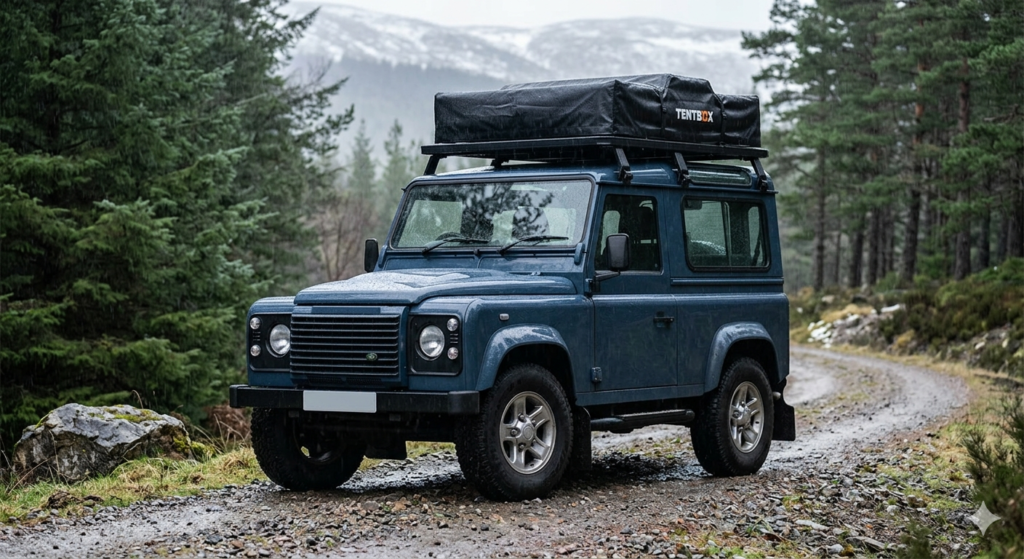
TentBox Lite 2.0 roof tent closed on a Land Rover Defender in a UK forest
In the world of professional outdoor work, your gear is only as good as its weakest hinge. While hardshells often take the spotlight for speed, the TentBox Lite 2.0 has become the UK’s go-to for versatility. It’s the entry-point for many, but does it actually hold up when the Scottish horizontal rain starts sideways? Let’s get into the “buy once, cry once” reality of this fold-out classic.
Disclaimer: bestcarrooftents.com is a participant in affiliate programs. We may earn a small commission on purchases made through links on this page at no extra cost to you. This helps us keep our expert reviews free for everyone.
The First Impression: Small Footprint, Big Living
The Lite 2.0 is the “Swiss Army Knife” of the TentBox range. Unlike the bulky hardshells, this sits compactly on almost any vehicle—from a small hatchback to a Forestry-spec Defender. When closed, it’s neat and aerodynamic; when open, it offers a skyline view that hardshells just can’t match.
1. Deployment: The Fold-Out Reality
Soft-shell tents have a reputation for being a “faff.” The Lite 2.0 counters this with an updated fold-out design that simplifies the process.
- The Reality: You aren’t hitting the 60-second mark like the RoofBunk, but from “parked” to “climbing the ladder” is a solid 3 to 5 minutes.
- Why it matters: If you’re a solo traveler, the fold-out motion is manageable, but you’ll want to practice the rain-cover tensioning before your first trip into a gale.
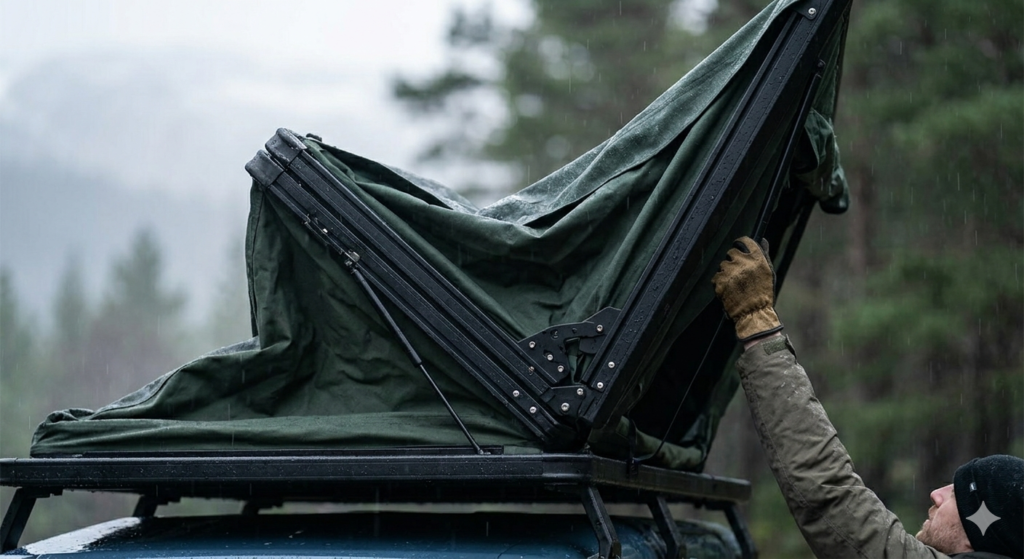
Setting up a TentBox Lite 2.0 fold out roof tent in the rain
2. Insulation & Weatherproofing
TentBox has upgraded the 2.0 with a 3000mm hydrostatic head rating on the rainfly. For those of us used to damp mornings in the woods, the fabric quality is impressive for the price point.
- The Wind Test: Because it’s a soft-shell, you will get more “fabric flap” in high winds than a hardshell. However, the matte-black frame is sturdy enough to prevent the “collapsing tent” anxiety.
- Condensation: The “SkyWindow” isn’t just for stargazing—it’s a massive ventilation win. Cracking it open even slightly significantly reduces moisture buildup on the internal walls.
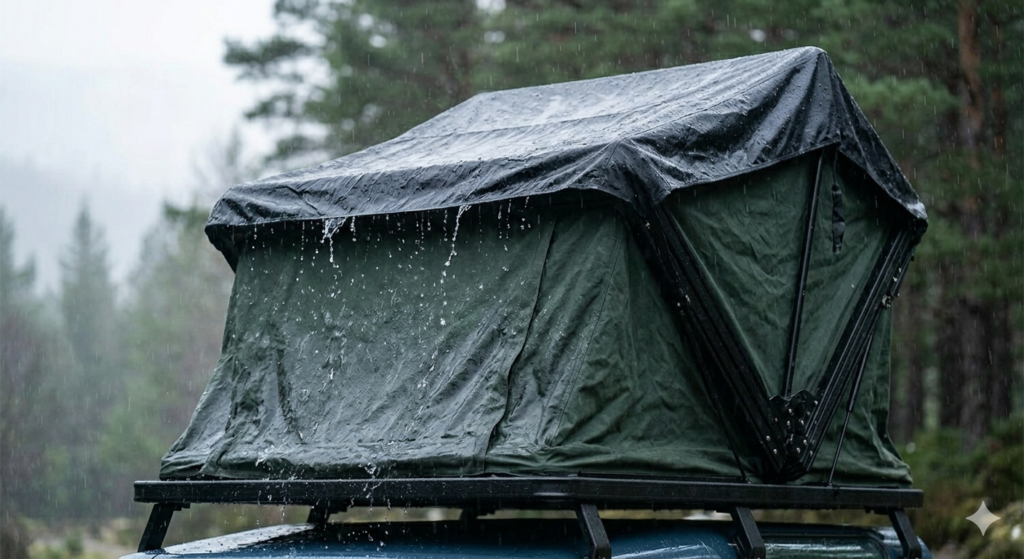
TentBox Lite 2.0 waterproof rainfly testing in wet UK weather
3. Interior Comfort: The Skyline View
This is the Lite 2.0’s “unfair advantage.” The windows on all four sides, plus the roof, make the interior feel twice as large as it actually is.
- The Mattress: It features a dual-layer foam mattress. It’s comfortable, but for long-term expeditions, I’d recommend adding their memory foam topper.
- Storage: You can leave some thin bedding inside when folded, but unlike the RoofBunk, you can’t stuff a full winter sleeping bag in there and expect it to close easily.
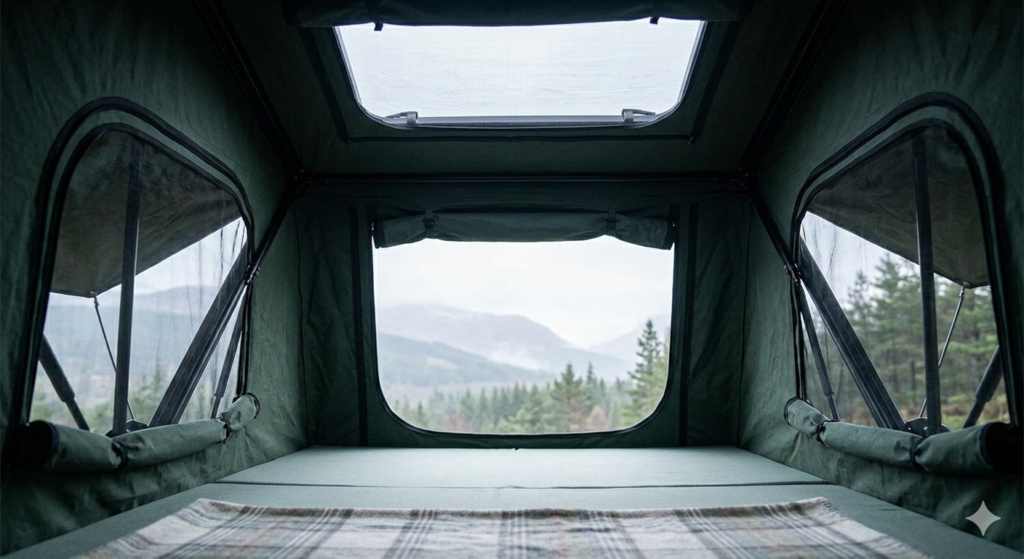
Internal view of TentBox Lite 2.0 showing skyline windows and mattress
Will the TentBox fit your vehicle? Don’t guess—check your roof’s dynamic load capacity first.
The Verdict: Pros & Cons
The Pros:
- Weight: At only 50kg, it’s compatible with almost every car on UK roads.
- The View: Unmatched ventilation and 360-degree visibility.
- Price: A professional-grade entry into roof-tenting (around £1,295).
The Cons:
- Setup Speed: Slower than a hardshell.
- The Cover: Dealing with a wet PVC cover when packing away can be a messy job in the rain.
Final Decision
The TentBox Lite 2.0 is the best all-rounder for the UK market. If you don’t have the roof capacity or the budget for a heavy hardshell, this provides a reliable, comfortable, and highly “instagrammable” basecamp that holds its value.
Mounting the TentBox Lite 2.0: What You Need to Know
At 50kg, the Lite 2.0 is one of the lightest on the market, but the “fold-out” footprint means your rack placement is critical for stability.
1. The “Solo-ish” Lift While it’s 24kg lighter than the iKamper, do not try to “bench press” this onto a tall SUV alone. Because it’s a soft-shell, the weight isn’t as evenly distributed as a hardshell when you’re lifting it.
- The Strategy: Two people can easily walk this onto a hatchback. For a Defender or Transporter, use the “sliding method” with a padded blanket on your rear roller or hatch to avoid scratching the paint.
2. Offsetting the Load Because the Lite 2.0 folds out to the side, you need to ensure your roof bars are wide enough to support the baseplate fully.
- Pro Tip: Mount the tent slightly toward the passenger side. This ensures that when you deploy the ladder and fold the tent out, you aren’t extending into the road if you’re pulled up at a layby or narrow track.
3. The “Nyloc” Security Check TentBox uses high-quality stainless steel mounting plates and Nyloc nuts. These are great for vibration resistance, but they take longer to tighten than the iKamper’s quick-clamps.
- The Tool: Keep a 13mm ratcheting spanner in your glovebox. It will save you 10 minutes of “faffing” with a standard wrench every time you mount it.
4. Ladder Angle is Everything The ladder on the Lite 2.0 isn’t just for climbing; it is a structural support for the fold-out half of the floor.
- The Rule: Ensure the ladder is at a 70-degree angle. Too steep and the floor feels bouncy; too shallow and you put too much stress on the hinges.
“Check back soon—I’m currently finalizing a 8-Point Compatibility Checklist to help you figure out if these tents are a safe match for your specific vehicle’s roof load.”